Home Blog Page 11

Chill With Virunga Mountain Gorillas

0

Have you ever thought of tracking mountain gorillas in the Odzala National Forest home to gorillas and many other wildlife species like forest elephants and flocks of parrots among others? Mountain gorillas are regarded as endangered and only found in few countries in the world, many travelers give DRC a third priority when it comes to gorilla tracking adventure, this is due to political insecurity which mounted the country, however this is now just history.

The country is safe and these species can be tracked safely in their natural habitat. The Democratic Republic of Congo is one of the three countries in the world that house these rare species the other two are Rwanda and Uganda so a visit to DRC for gorilla tracking safaris is never a regret as these species can be seen clearly in the Odzala National Park, and these giants are one of the leading tourist attraction in Congo. Very many travels leave their beautiful homes and office to come to this African country and spend at least 1-2 days in the forest with these giant apes.

The Democratic republic of Congo houses a very big number of these apes over 300 individuals live in this park out of out 1000 mountain gorillas that live worldwide. These apes are habituated to human standards and they can be seen safely without any harm caused to human, regards to rangers who monitor them each day, without their work truth the gorillas probably wouldn’t be here at all without tourism. It is the one thing that can guarantee their survival, by making them worth more alive than dead and ounce you book Congo gorilla safaris, chances of seeing these human relative is high over 97% and above.

Congo has about 5 habituated gorilla families ready for tracking each day and only 8 members are only allowed to track in each gorilla family per day. Each group is led by a dominant silverback responsible for any activity taking place in a group including determining where to feed, rest, also responsible for protecting the group with other members like the black back for any attack.

The one perfect hour you are allowed to stay with these giant apes, is regarded as the most emotional, humbling and exciting of your life. The mud and sweat become distant memories as these wild mountain gorillas is a true joy and, if everyone could do it just once, the world would be a better place.

The well-armed ranger guide is readily available to give you relative information on any forest flora and fauna you meet on your way. Utilize this one hour while observing as well as taking photography and in the process of tracking gorilla you will be privileged to meet other primate species like the black and white colobus monkey , baboons, bird species are also superb over 150 species of birds live in this forest. You are reminded to come with tracking gears such as sturdy pair of walking shoes/boots, long sleeved shits or louses, as meeting them involve passing through tough path and also some level of physical fitness is needed.

The trek to see the mountain gorillas can go from 1-8 hours since their wild animals meeting them is unpredictable. Congo gorilla permits cost US$400 per person per tracking including park entry fee and a ranger guide. Though you are required to book in time at least 2-5 months prior to your travel dates, you can also get last minute offers!

Certainly there is no another interesting tourist activity done on earth than a one hour encounter with the endangered mountain gorillas in the wild. For more information about Congo gorilla tracking contact us our team is read to get back to you swiftly.

10 Secrets to Traveling Like a Local in Africa

0

Meet the locals

The first step to living like a local on the road is meeting the residents around. To start these connections, try staying in a local home. Search for home stays, couches, castles, local hotels and more, wherever you go. It’s a great opportunity to search a large inventory of local people..

This is a great start, though your host doesn’t need to be your only resource. Take public transportation or take a cab and chat with your driver. The more time you spend off the well-beaten tourist drag the more likely you will be to connect with new people.

Be willing and ready to wander

 While a bus tour might be the most efficient way to hit the tourist attractions, try exploring the city on foot to better absorb the sights, sounds and smells of your surroundings. Put down the guidebook, put the map away and get lost. Don’t race around with an ambitious itinerary; instead, follow your feet and the people around you. It’s amazing what kind of things you can stumble upon. You will find interesting things you did not know.

Eat where the Locals eat

One of the best ways to connect with a new place is through your stomach. Eat where the locals eat. Search local blogs instead of consulting your guidebook. Ask your host for recommendations, seek out local markets, try the street food and/or find the food trucks. Search the internet for cooking classes or opportunities to eat in local homes.

Try Local Recreation

Vacations should be relaxing and rejuvenating. While getting spoiled at a spa has its place, see how the locals decompress from their work days. Borrow a bike and hit the trail. Jog through city parks. Maybe go to the beach or grab a fishing rod. Watch for flyers announcing local concerts, festivals and celebrations.

Volunteer

If you have time and feel good about giving back, think about volunteering during your travels. Opportunities like visiting orphanages let you help out while facilitating a cultural exchange and, perhaps, discounted and/or free food and accommodation. You can contribute your skills to the local community or build new ones, through helping on a farm, with eco-building projects, with animals, with web design, with language exchange and more. The choice is yours.

 Learn a few key phrases

When you travel to a destination where English is not the first language, having a few key phrases in your back pocket can be a good way to feel more connected to the people around you. Whether you buy a phrasebook or use an app, make a point of learning some basics such as greetings, thank you, an apology (sorry or excuse me), some numbers, and directions. Most locals appreciate the effort and will respond positively.

Be flexible

Travel is about going with the flow. Rigid plans mean you might miss out on seeing or experiencing something unique. Having a set itinerary is fine and can help you maximize your time, but don’t discount serendipity. Sometimes it pays to create space in your travel schedule for unexpected surprises.

Look for markets and grocery stores

Seeing what the staples are in any given destination can offer a lot of insight into the local culture. Make a point of seeking out markets and wandering into grocery stores. If you have cooking facilities at your apartment or hostel, buy a few things and try your hand at a local dish. Bonus tip: If you have time and it makes sense for where you are, take a cooking class to get even more of an insider’s perspective on local cuisine.

Ask for tips at hostels (even if you’re not staying at one)

The people who work in hostels often have great advice on where to get the best food, local bars to check out, and off-the-beaten-path things to do. Even if you’re not staying at a hostel, poke your head in to see if you can glean some useful tips.

Think in terms of experiences, not must-see lists

For every city you go to, there will be countless best-of lists filled with the top things to see and do. Checking these off your list will ensure you do experience some of what a destination is known for, but it can also limit you.

Guide to Gorilla Trekking in Africa

0

It’s hard not to fall for mountain gorilla trekking and its mix of natural beauty on any Africa holiday. The moment with the silver back makes it one of the best wildlife experiences found nowhere other than Uganda, Rwanda and Democratic Republic of Congo. Once you have the trekking gate pass-the permit, you free to explore the beautiful primate jungle under the guidance of park rangers after briefing until where the rare jungle creature s are. It’s easy to extend your trip to see gorillas twice or head out for a all-day gorilla habituation tour and watch every move and behavior of their life in the jungle. However, there is a great offer where travelers can track the entire habituated gorilla group as a family without any intruder.

Don’t be put off by gorilla trekking permit prices of Rwanda that was hiked from $750-$1500 yet there are other cheap alternative gorilla permit destinations gorilla permits like Uganda for US$700 and Democratic Republic of Congo for $400.The permit prices do mean that gorilla safaris in Uganda and Congo are cheaper than those for Rwanda though the trekking experience is same. If you are on a tight budget and want to see gorillas, better to book your trip during tourism promotional months of April, May and November where permits cost $450 in Uganda and $200 in Democratic Republic of Congo.

Despite the many exciting tourist adventures in the world, mountain gorilla trekking remains one of the world’s most loved wildlife adventure for every traveler to Africa. In Just 2-3 days, you can enjoy a life changing wildlife encounter in the well conserved nature forests of Bwindi Impenetrable Forest, Mgahinga National Park, Virunga National Park and Volcanoes National Park. After a great moment of observation and photography, looking back at memories in your camera confirms much more natural beauty of the jungle full of history and perfect leisure explorations on foot.

Also gorilla trekking in Africa matters a lot in all Africa safaris since it offers a lot beyond to just seeing the primates. There are many appealing culture villages and communities to explore, active volcanoes of Nyiragongo, Bisoke, and Karisimbi ,Lake Bulera and Ruhundo, Ibywachu cultural village, the Batwa, people , waterfalls among others that are explored on foot .Beyond doubt gorilla trekking remains one of the ultimate  wildlife adventure for budget ,midrange and luxury travelers and only found in Uganda, Rwanda and Democratic Republic of Congo. If you are after the most charming primate safari in Africa, there is nothing unique and good like tracking gorillas in the wilderness.

Pay by Credit card, Master card, debit card, wire transfer for your upcoming gorilla trekking tour or gorilla permit and enjoy the outstanding experience of the jungle forest. However remember to take enough cash since there are many other amazing tour adventures that interest you during your gorilla tracking vacation in the destination of your choice. If you not sure where to start and book your gorilla tour, send an inquiry to a tour agent or expert who will give you all the necessary information of how you can make it happen. Remember to make right choices of your trip organizer though would very much recommend those that run tours across the East Africa Region. Your budget will definitely determine where you will have your trek from but make you you book your trip a few months in advance since other tourists book a year in advance.

Gadgets to Take on an African Safari

0

To make your safari dreams come true, whether it’s viewing wildlife, visiting a city, cultural village, beach or mountain climbing, you need to have right travel gadgets.

Camera

Keeping your memories as photos or souvenirs is the most important part of your safari. You need to equip yourself with a personal digital camera to take the best photographs. A good idea is that you need to keep your camera safe, from the scratch during long dusty and bumpy drives, so bring fitting camera bags as well. If you were more into photography, you need to deal with movement and the shaking while taking photos, so you’ve got to have strong grip equipment such as tripods.
Tip: Please make sure that you bring the right gadget for a specialized adventure activity for instance while on a gorilla safari, a tourist complained that he was not aware that flash photography was not allowed. Also make sure that you practice on how to use the gadget before taking it on safari.

Smart phone

Going on a safari in some remote African destinations with your smart phone is a great idea. Depending on your interests, smart phones come in range from budget, mid range to high end. For instance iPhones usually have insight cameras that can take better photos or record videos while on a trip. Whether you need to call and talk to your friends, take wildlife pictures or stay on social media, there are a lot of travel apps to keep you active. But if you were into photography with your phone, consider upgrading your phone or bringing the one with a high end camera.

Ipad/ Tablet

I pads can add exciting experience during your trips. For most travelers there are some tasks which cannot perform well using a smart phone such as reading electronic travel guide books, answering emails or writing content. So I pads are better alternatives than carrying heavy books or laptops can take space in your back pack.  They are easy to carry and have enough storage capacity for photos as well as back them up. You can also use social media, email and share the fun with friends and family. Check with your lodge if they provide free access to Wi-Fi.

Accessories

If you need to improve your safari experience, you need to choose useful accessories that will not just fill up the whole space in your backpack. The ones that we recommend for you here include universal or multi-USB travel adaptors, power strip, charging cord, spare batteries, lenses and memory cards, internet routers. With some of these accessories, you’re better off to what you want. Whether it’s charging multiple devices such as camera, smart phone at the same time, backing up photos or better internet access, they are brilliant gadgets to take on a safari. Be careful just do not misplace or loose or forget one at home or lodge.

Most of the time, when you’re on a long or short excursion, your camera is switched on and ready to shoot, this can drain the battery very fast.  And there’s something to prepare for before you head into the wilderness. Your lens might get spoilt or memory gets full. So you need at least multiple memory cards and batteries to help power your camera all day long. For wildlife viewing safaris, zoon lenses are best to capture birds or animals as they tend to be at a relatively long distance.

Binoculars

Binoculars are essential for bird watching trips but also helpful when the eye cannot clearly see animals in the bush. Often times you have to first identify animals especially birds and then take photos.

GoPro action camcorders  

There’s a variety of GoPro action camcorders with hi-tech capacity for filming, recording and photography. You might need to take one on your safari. Whether you’re planning to go game viewing, mountaineering, bird watching, cycling or rafting, camcorders are designed for a wide range of tourist activities. To give you a hint, make sure to buy a water proof case for your gadget.

Torch or lantern

Torch or lantern is great gadget to have for bush camping and night game drives. You also need one in your lodge room because hydro-electricity can be unreliable. You might even find that some lodges schedule their lighting and will switch off late in the night especially if they use generator. You can choose any lighting gadget as long as it easy to carry and keep.

Power Bank

Smart phones don’t keep battery for long hours especially when you’re on internet. For that reason take a fully powered power bank whenever you’re traveling. As you prepare for your safari, look out for stylish and portable power banks.

Laptop

Laptops are recommended for travelers on a safari who wish to do more work especially when your smart phone or tablet cannot help. Mac books and windows are highly used travel laptops but getting one will depend on the destination you’re visiting and activities that you wish to do. There’s need to have a laptop though there’s need to be more careful with keeping it safe without getting damaged or stolen.

Sunscreen and sun glasses

The dry or summer seasons has come and time to travel to African on a safari. Don’t forget about there in the wilderness the sun can be scorching and make you uncomfortable. Take sunscreen and wear sun glass especially if you’re conducting trips on a sunny day in open air safari vehicles.

A journey to Success: Transfrontier Parks and Communities

0

Southern Africa has often been at the forefront of conservation initiatives on the African continent. The region’s experience in game capture, managed game parks and translocating elephants being a few examples of where it has set standards.

Over the past couple decades it’s been doing the same in cross-border conservation initiatives, such as establishing Transfrontier Conservation Areas (TFCA). These are wilderness areas which have no political boundaries, entities created to encourage natural game migration across ecosystems that are allowed to flourish.

Along with TFCA comes a group with its own particular focus – balancing community needs with those of nature and the over-used but all-important buzzword, ‘sustainable tourism’ (now known as ‘Better Tourism’).

This is Transfrontier Parks Destinations (TFPD), run by co-founder Glynn O’Leary, who finds tourism locations where development is needed most – in or adjacent to Transfrontier Conservation Areas – and there revitalises and operates community-owned hospitality facilities, which essentially translates into lodges.

The TFPD then assists in commercializing these community assets, such as !Xaus Lodge – exactly 91 dunes west off the Auob River road in the Kgalagadi Transfrontier Park (linking South Africa and Botswana), on ancestral land owned by the ‡Khomani San and Mier communities. Sometimes it may involve a national park, or a provincial tourism authority; whoever is involved, it’s all about partnership.

!Xaus Lodge has 12 individual chalets, each with its own deck overlooking a vast saltpan and waterhole fed with fresh water. Watching gemsbok traipse across the pan in energy-saving desert fashion is a wilderness treat, as is exploring the dunes with the resident ‡Khomani San bushmen.

At over 3,5 million hectares, the park is almost twice the size of the Kruger National Park, and is home to the famous black-maned lion.

An area that has more socio-economic need, given its history of civil war, social and political upheaval and associated rural poverty, is the Great Limpopo Transfrontier Park (GLTP). Fifteen years ago it was proclaimed with the signing of an international treaty involving Mozambique, South Africa and Zimbabwe, thereby connecting the Kruger Park, Zimbabwe’s Ghonarezou Game Reserve and Mozambique’s Parque Nacional do Limpopo, a conservation area of 35 000km².

All three countries’ borders meet at Crooks Corner, at the lush and wooded confluence of the Limpopo and Luvuvhu rivers. This is the northernmost Pafuri section of the Kruger National Park, a location of great elephant herds, historical legend and crocodiles. It has tourism, and the opportunity for responsible development, written all over the landscape.

Travellers who support the increasingly popular model of ‘Better Tourism’ can access this land rich in stories through Awelani Lodge, situated near the Pafuri Gate entrance to the Kruger. The lodge offers visitors the opportunity to walk or mountain bike through the wooded conservancy, a lush landscape dominated by significant woodland, sandstone outcrops and over 700 species of birds.

Over the border in the Mozambique section of the Great Limpopo Transfrontier Conservation Area, home to the Big 5, the unfenced Machampane Wilderness Camp offers full-service accommodation and guided wilderness walking trails, especially significant in an area where jobs are almost unheard of, and bush skills abound.

At 2200m, Witsieshoek Mountain Lodge in the Maluti Drakensberg TFCA is far south of what is known as ‘the bush’, and the highest lodge in South Africa’s statuesque northern Drakensberg remote mountain range. As with the other TFPD operations, the lodge provides essential employment opportunities and secondary economic activity that has proven to impact positively on the local economy.

The lodge provides access to Sentinel Peak and the Maloti Drakensberg that draws backpackers, hikers and climbers, probably viewing the endangered bearded vulture and the extraordinary mountain flora, like the sewejaartjie, that has adapted to grow at high altitudes.

Each TFPD managed lodge is a holistic entity, providing essential work and local economic activity in an area of great natural beauty.

Just recently O’Leary spoke of a meeting involving serious tourism players where he highlighted the following: “What we see is that these community-owned tourism activities create strong rural development, and that ‘Better Tourism’ is helping create great places to live”.

Best Movies to Inspire You to Visit Africa

0
Virunga Movie

Are you a first time traveler planning to visit Africa on a safari? You need to arouse your feelings and know about the continent. One of the best ways to do that is to watch movies. The good thing is that, you know true stories have happened in Africa and the movies are hands on experience. It is especially so with a range of both sad and entertaining stories; from gorillas in jungles or lions in the savannah to the civil conflicts, poverty and living conditions.

Below is my favorite list of movies. As a matter of ethical admission, I have watched some of these movies, whether that makes me biased or simply more conversant is up to your judgment.

Gorillas in the Mist

This movie is about the achievements and struggles that Dian Fossey undertook to save and conserve the mountain gorillas in the Virunga massifs of Rwanda and DR Congo. The movie starling Sigourney Weaver tells how, where and why Fossey dedicated her life to conserve gorillas.

Explaining the threats to extinction of gorillas that makes Fossey a true warrior, primatologist and conservationist. Due to poaching, habitat loss, human diseases and conflicts, gorilla numbers were reducing which attracted Dian Fossey to study gorillas. In her first book “gorillas in the mist” she shared her findings and inspired the international community to introduce gorilla tourism. It is an interesting story along with the current gorilla trekking, the life changing wildlife experience which is on top of many travelers’ bucket list adventures. You would as well to know the story behind gorilla conservation while planning a gorilla safari to Africa.

Hotel Rwanda  

Rwanda is now as a premier eco-tourism and MICE destination with Kigali being the cleanest city in Africa. Yet 20 years ago a genocide happened in1994 involving Hutus against Tutsi in which nearly a million people died in only 100 days.

It is a compelling story to know why some people survived and other perished. With testimonies from the people, who survived the massacres, it is believable that over one thousand, two hundred sixty eight people took refuge in the hotel, also known as Hotel Des Milles Collines.

As strange as it may sound, Paul Resesabagina’s true story who took control and actually went on to bribe the militias. How refuges in the hotel were protected safely still triggers thoughts and fear that you have to deal with after watching this movie.

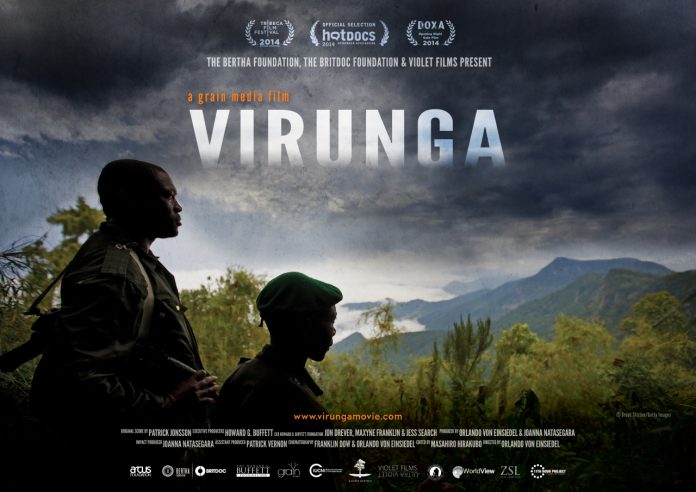
Virunga the movie

Virunga is an award winning documentary. Any traveler planning visit DRC on a safari but still doubts about insecurity situations, should watch this movie.

This movie documentary details the exciting, real and very true stories of rangers and conservationists getting entangled in civil conflict as they work to save the population of mountain gorillas in Virunga National Park, Eastern DR Congo.

But it was strange for rangers getting caught in war as armed rebel groups invaded the park for its resources which turned into a civil war. As rangers of fortune, there would be no substitute for mountain gorillas if it wasn’t a sacrifice for one’s life. Happily, this documentary shows off current conservation efforts as the gorilla numbers are increasing and improved security attracting many travelers who undertake gorilla trekking safaris.

Queen of Katwe

Covering one often overlooked aspect of games Chess, a young Ugandan lady avoids misery that many people tend to live when born in poor families. It seems the only way for her to get out of poverty is becoming a chess champion. As her success comes from hard work, another girl from the same family emerge to compete, their coach and mother understand how it is not easy trying to raise an embattled family together.

Some of the scenes in the movie were shoot in Katwe one of the suburbs of Kampala the capital city of Uganda. It really has tales of Ugandan local lifestyles; want to know more about local living and lifestyles of Ugandans. watch this movie as you plan a trip to the pearl of Africa.

Last King of Scotland

The movie documents about the new leadership of president Idi Amin during 1970’s in Uganda and the political winds that blew in a direction of uncertainty.  Based on a novel by Giles Foden, it enlightens the story of a Scottish doctor James McAvoy who gets close to Amin but simply ignores the rumors of harsh rule and human right abuses.

The terrified doctor tries an abortion on Idi Amin’s wife gets to know about his hanging and that of French hostages at Entebbe airport. This kicks in a fear that a young man couldn’t keep to himself but to let the world know about the gruesome dictatorship of Idi Amin by the character of Forest Whitaker.

You have heard rumors about the dictator Amin, the moment you arrive or chat with an elder which is hard to know fact from fiction. Better watch this movie and retrace what really happened to the pearl of Africa Uganda.

The Lion King

Any traveler planning to visit East Africa, Kenya, should watch the lion king. You need to familiarize with their Swahili cultural references to wildlife. “Simba” which is lion is a club that can’t wait to be a king sings along with “Rafiki” which means a friend and “poomba” warthog. Perhaps use them as you spot wildlife out there in the wilderness. You not only learn to be at par with Kenyans but the charming music and choreography will just mark the beginning of your adventure in East Africa-Kenya.

How to Prepare for a Uganda Safari

0
Kidepo Valley Safari

Travel to Uganda is slightly same like visiting any other travel destination though a few things can’t match like weather, green vegetation and many tour adventures sited in different parts of the country. Uganda has the best holiday weather, warm and comfortable for any kind of adventure even village travels. However, you need to prepare for your trip before travel and wait to just experience a remarkable holiday in Africa. Get the best travel company, buy or pack right clothes, visit in the best times, get the immunizations you may need and this is very possible if you plan at least a few months to your travel date. Avoid last minute travel deals because you will have less time to inquire about all the trip essentials, travel distances and later find your holiday either just fine or stressing.

Right Tour Company

With the many travel Agents and tour service providers all offering the same product and service, good to use the one that has ever been used by other travelers from different corners of the world to avoid fraud. You can do your trip your way but using a safari tour company is the best option since they are well conversant with the country and its great attractions. It’s not expensive to go on safari with a tour company in Uganda and the experience is worth the cost. You can travel with a tour company that offers trips in line with your budget and those with reviews on either trip advisor or safari booking. This will be seen starting from mail responses, price offers and former client recommendations. However lookout for that particular tour company that offers that matches your travel interest and budget.

Best Travel Time

If you are trying to choose when to visit Uganda, this can depend on your free work schedules or vacation period but the country is a year round destination so no matter when you visit fun is all you can expect. However, the best time to visit Uganda is June-October and December to March the dry months of the year good for all kinds of holiday including gorilla trekking, chimpanzee trekking, birding, mountain climbing, hiking, fishing, rafting, boat cruise, cultural tourism among others. But these are the peak season months of travel in Uganda so there is high demand of everything from tour adventures, transport and accommodation.

Those looking for great travel discounts and budget Uganda safaris, plan your visit in the months of April, May and November when Uganda markets its tourism products including the prime primate adventure-Gorilla trekking. Discounts are on everything including transport, accommodation and gorilla permits.

Park right clothes and high Quality Camera

What to wear on a Uganda safari depends on what you going to do during your trip but being a warm weather country, I would highly recommend short and long sleeved wears to change in case it gets hot. Jackets and rain gears are also needed since it gets cold in the evening especially those heading out on Uganda gorilla trekking safaris to Bwindi forest and Mgahinga national park. Raining in Uganda is unpredictable; it may shower any time during the day or night. However, during the dry months jackets are only needed in the evenings but it shines all day long and sometimes it gets extremely warm.

But if gorilla trekking is on your travel program, its ideal to wear long sleeves and long trousers that cover the entire body since the mountain gorilla search and trek takes place inside the wild jungle forest a home of so many forest habitats including biting insects. For natural reasons, wear neutral colours for safari and chill later at your, lodge in your bright colored clothes. Don’t forget to carry a good camera and binoculars for spotting birds and wildlife in a distance or up-close on tree branches. Uganda is a home to tree climbing lions, monkeys, chimpanzees that love staying up close in tree branches.

Immunizations & Vaccinations for Travelers to Uganda

Make sure you are up-to-date on routine vaccines before any trip to Uganda especially yellow fever measles-mumps-rubella (MMR) vaccine, diphtheria-tetanus-pertussis vaccine, varicella (chickenpox) vaccine, polio vaccine, and your yearly flu shot. You will need to take prescription medicine before, during, and after your trip to prevent malaria and your doctor will prescribe the best anti malarial that will keep you safe and free from malaria .This is perhaps the least exciting part of traveling to Uganda, but it’s necessary and important to keep your life safe and free from several diseases.

Interview with Catherine Capon – Naturalist and Adventurer

0

Catherine Capon is a naturalist and adventurer who is passionate about responsible tourism.Thank you for joining us here at Justice Travel for our first Wilderness Week.

Can you tell us a little bit about your background and how you became an eco-adventurer?

My background is in ecology and zoology but I have always been interested in communicating science to non-scientists.  This desire has seen me working in wildlife filmmaking, sustainability consultation and conservation journalism.  However, it was my time working with Sam Branson at Sundog Pictures that really solidified the importance that tourism plays in the conservation of endangered species.  People travelling to see wildlife brings money into the local community and the residents therefore value wildlife more alive than dead (via poaching, bushmeat, illegal fishing or habitat destruction for agriculture).  I therefore decided to start a not-for-profit campaign to promote ecotourism and wildlife watching destinations around the world.  Rather than seeing ecotourism as something for middle aged couples with sandals and binoculars, I wanted to also excite the younger generation about the adventure activities that wildlife watching entails.  So far, I have shared the water with a green anaconda, rock climbed with marmosets, been metres from a Bengal tiger and swum with great white sharks!  I’ve just started a YouTube Channel to follow my adventures too.

You have just returned from India, what were your highlights?

My last ecoadventure was in India where I visited Ranthambhore National Park to see the tigers and Kaziranga National Park for the India Rhinos.  The two destinations differ vastly and it was great to have the contrast on a 2 week trip.  Ranthambhore is hot and dry in March which is perfect for tiger watching as they go to the watering holes to drink.  Each safari is hugely exciting as seeing a tiger isn’t guaranteed so tracking their footprints is a thrilling process.  We were also lucky enough to see three leopards during our stay which is very unusual as they are extremely illusive in the area.  Kaziranga is green and lush in comparison with far fewer tourists.  The Indian Rhinos’ story is a phenomenal conservation success.  In 1903, there were only 15 left in the area.  Now, the population is comprised of over 2,000 individuals and we saw countless rhinos on our ecoadventure.  Kaziranga highlights also included with Western Hoolock Gibbon which is the only ape in India and the incredibly rare Ganges River Dolphins.  If you subscribe to my YouTube channel, you’ll see films of both destinations.

How do you choose your destinations?

As I’m looking to engage travellers who are new to ecotourism and wildlife watching, I tend to choose destinations with really charismatic animals.  The hope is that someone might be initially enticed by the orangutans in Borneo for example, but will then be moved by all of the other animals that live in the forests too.  With regards to accommodation, I look for sustainable businesses that use renewable energy, local products and employ local people.

What makes a great eco-resort?

For me, a great eco-resort is one that encapsulates life in the community that you’re visiting.  This may mean that tourists have to adapt to new types of food, accommodation and customs but you’ll definitely have a story to tell when you get home.  The resort should have as little impact on the environment as possible with local people benefitting from the business.

Do you have a favourite wildlife destination/s?

I’m often asked which is my favourite wildlife destination and it’s the hardest question to answer.  However, Madagascar exceeded all of my expectations and I’d visit again in a heartbeat.  Due to its evolutionary history, the flora and fauna on this island are like nowhere else on the planet.  With 107 species ofLemur (20% of the world’s primates), Baobab trees straight from a fantastical Disney animation, mysterious Tenrecs that resemble an otter-hedgehog hybrid, and the world’s smallest species of reptile; wildlife watching here is a truly unique experience.

However, 30,000 hectares of forest are being cut down each year in Madagascar and, if this rate continues, there will be no forest left within 25 years.  Ecotourism is a viable way to make the forests worth more to the local people than turning them into agricultural land.  If the Malagasy people can make a good living from guiding tourists through the forests and showing off the besotting animals it hosts, they are far more likely to protect them for many more generations.

Why is responsible ecotourism important?

People have and will always travel.  Travelling itself has consequences for the planet but if you compound that impact with staying at an environmentally unfriendly mass tourism resort then a 2-week holiday has a big impact on the local area and the wider ecosystem.  Choosing sustainable accommodation and immersing yourself in nature during your time off work will mean that you’ll have a much deeper respect and understanding of the place that you’re visiting.  At its best, ecotourism provides employment for local people and puts a real value on areas of outstanding natural beauty.  Ecotourism has also been scientifically proven to benefit wildlife conservation.

Where can we expect to see you next?

During my campaign so far I’ve travelling far and wide but I often get asked to explore ecotourism options within the UK.  I’m heading to Alladale Wilderness Reserve in the Scottish Highlands next for a weekend of hiking, biking and wildlife watching.  This reserve is reintroducing species that have previously been removed from the area like the Red Squirrel and the European Wildcat.  The owner of the reserve, Paul Lister, also hopes to reintroduce wolves back into the United Kingdom after a long absence due to being hunted to extinction.

Catherine Capon – Bio

“Having always been bewitched by wildlife, I studied ecology and zoology at Imperial College London where I was fascinated by the theories but yearned to see these exotic creatures in their environment. My first wildlife expedition was to study bats in Honduras.

I slept in a hammock and waved goodbye to all the ‘necessities’ that I’d become accustomed to living in London. I learnt to live a very simple life in that cloud forest. It was here that I experienced my first moment of pure awe – sitting on a smooth rock in the centre of a clear stream with the midnight forest singing around me. Fireflies and bats were dancing over my head and the sheer happiness that I felt moved me to tears. That moment changed my life forever and I became fiercely protective of that forest. I became an ecoadventurer.

My life since university has seen me working in wildlife filmmaking and sustainability communication. Throughout this journey, I have kept the sense of purpose that overcame me in Central America. At every opportunity, I have travelled to a new corner of this planet to see the wildlife and how the people interact with the environment around them.

I’ve been lucky enough to visit places so beautiful that no photograph can truly capture them, and along the way, I’ve tried to encourage my family and friends to join me.

It was these travels, through work and pleasure, that inspired my mission to write about and photograph the top wildlife hotspots on the planet.

I hope that by doing this, other awe-seekers and ecoadventurers will awaken and unite to live more consciously with our planet.

The hard earned cash that you spend on your wildlife holiday makes those animals worth more alive than dead. At its best, ecotourism provides employment for local people and puts a real value on areas of outstanding natural beauty.”

Gorilla and Chimpanzee Safaris in Rwanda

0

After years of wanting to take gorilla tours and chimpanzees experience, Jackie and Emma made it possible, with a safe, wonderful, and unforgettable experience. We chose Rwanda Gorilla Safaris from reading their Trip Advisor reviews and were not disappointed, by selecting their custom higher-end/ luxury and private tour for seven days.

Rwanda is one of the gorilla safari destinations in Africa alongside Uganda and Democratic Republic of Congo. Besides Gorilla and Golden monkey tracking in Volcanoes National Park, Uganda offers chimpanzee trekking and other Primates found in Kibale Forest National Park and Wildlife game drives in Queen Elizabeth National Park.

We met Emma at our hotel in Entebbe, the first morning of our tour. We paid the balance of our tour while at the hotel, in a safe environment. Emma placed our bags in the back of his comfortable Land Cruiser and off we went, in the direction of Kibale National Park and Kyaninga Lodge for our first nights’ stay. All of our (safe) meals, water, accommodations, etc. were organized by Rwanda Gorilla Safaris.

Our itinerary included two nights at Kyaninga Lodge near Kibale National Park in the direction of Fort Portal. This is where we would track chimpanzees in the wild. We were not disappointed. The chimpanzee tracking was within Kibale National Park, with an initial orientation about chimpanzee rules and the forest. Placed in groups along with our tracker, off we went into the forest. Our chimpanzee experience was about five hours long. We did have to walk quite a bit over uneven terrain, up and down valleys, and some tricky steps around some wet spots. Our guide suggested to tuck our pants into our socks, watching out for safari ants and to use insect repellent around your sock/boot area. In total we managed to encounter 23 chimpanzees, including some playful youngsters. Kyaninga provided a delicious box lunch which we ate at the restaurant within Kibale National Park.

In the afternoon we made a visit to Bigodi Wetland sanctuary walking around a swamp. We saw the blue turaco, plus the black and white colobus monkey, the red colobus monkey and the grey-cheeked manageable monkey. It was a very pleasant walk, and the offer was there to use their rubber boots which we should have taken up on. We had to cross over the swamp over a wooden walkway which in parts was underwater. Having to cross, our boots and socks were wet; this was really a great experience.

On our next day plus a two nights in Katara Lodge near Queen Elizabeth National Park included two big-5 safari drives in Queen Elizabeth Park, along with viewing the tree-climbing lions in the southern part of the park. We also thoroughly enjoyed a cruise in the Kazinga Channel, from the Mweya Safari lodge, situated within the Park along we saw herds of hippos, crocodiles, elephants, water buffaloes, and water birds on the shores of lake. The Kazinga Channel was a must do. The volcano crater rim drive is quite beautiful.

Our last two nights, staying at Buhoma Lodge were to be the highlight of our trip with gorilla trekking. Our gorilla trekking permits were prepaid and organized by Jackie from Rwanda Gorilla Safaris. Buhoma lodge is well situated within Bwindi Impenetrable Forest with the orientation meeting centre right across the road. It is here where officials from the national Park, organize the groupings of trekkers into activity levels and capabilities. Our group was an intermediate group, guided by our ranger, Rita. Rita was awesome. We drove 45 minutes away where from the park headquarter and then the trackers led us through the forest, slashing at the thick creepers, to track gorillas.

When you find the gorillas you must be 7 meters away from them, you should try not to make sudden movements and to keep your voices low so that the group remains relaxed. Although these mountain gorillas are now used to seeing people, do bear in mind that they are still wild animals and can sometimes react unexpectedly, so always heed your guide’s and trackers’ instructions and make life time with mountain gorilla experience a memorable one.

For a small fee, porters are available at the trail heads to carry your backpacks and offer a hand during tricky parts of the hike. Even if you don’t really need them, hiring a porter is a helpful way to contribute directly to the local economy and chatting to them en route can enhance your experience both of local life and of your gorilla trek.

Traveling with a conscience in the Selinda Reserve

0

Almost an hour by plane to the north-east of Botswana’s legendary Okavango Delta, close to the borders with Namibia, Zambia and Zimbabwe, lies an African conservation legend… The Selinda Reserve.

It’s hell-hot as the build up to the annual rains reaches its height, reducing the area to nothing more than a loose collection of permanent pools and lagoons dotting an otherwise parched landscape. And yet life is abundant here, and the dusty road to Selinda Camp is littered with amazing game sightings.

Guide Motsamai “Mots” Morundu marvels at how the resident wildlife copes with the heat and tells me about the success story we are traversing over.

Little more than a decade ago, this area was still home to a hunting concession before Great Plains Conservation, headed up by wildlife filmmakers extraordinaire Dereck and Beverly Joubert, took it under its wing – and introduced the concept of sustainable development, community engagement and conservation through low-impact, high-end tourism.

Mots has worked with Great Plains since it began, and sums up the concept very nicely: “it’s about making sure that what we have now, here, is valued by everyone and can be enjoyed by my children, their children, and their children’s children,” he says. “It’s not just about recycling, reducing energy and being green – it’s about being beneficial to everyone involved in it – whether you are an animal or a person,” adds Mots.

Selinda Camp, and its sister properties on the reserve – Zarafa and Selinda Explorer’s Camp – are recognised by Fair Trade Tourism, Africa’s leading sustainable tourism organisation, through its partnership with the Botswana Tourism Organisation‘s Ecotourism Certification Programme. This means that guests staying on the reserve can rest assured that their holiday spend is making a real and lasting difference to both conservation and communities.

Koketso “Koki” Mookodi is the community liaison officer for Great Plains Conservation. “For us here on the Selinda Reserve, and across all of the camps we operate, conservation underpins our business,” she says. “It’s vitally important that we equip young people with conservation knowledge and an understanding of the role that tourism plays in helping to protect our environment,” Koki explains.

“We have adopted two villages on the Delta’s panhandle – Seronga and Gudigwa – and have rolled out a conservation education programme in their schools to complement the work of the conservation clubs,” says Koki. “Through this programme the children have become conservation ambassadors, teaching their entire communities on the importance of protecting wilderness areas and the wildlife that call them home. They are also champions of our Big Cat Initiative and Rhinos Without Borders campaigns.”

The big question seems to be: “does sustainability really matter to tourists?” For Americans Celsea and Wyatt Jenkins it most certainly does. They are among a growing number of international travellers who choose to live sustainable lifestyles and select their destinations based on how sustainable they are.

“We travel widely and make a point of engaging in authentic, local experiences which benefit communities no matter where we are in the world,” explains blogger and fitness guru Celsea. “We live in San Franciso and use solar energy, recycle, give to community programmes and try to live as consciously and sustainably as we can. So it makes sense for us to choose our holidays based on how sustainable they are.”

Business developer Wyatt reinforces his wife’s viewpoint by saying that he is particularly conscious of where their holiday spend ends up. “We need to know where the money goes and feel comfortable with the footprint we leave behind us,” he says. “There has never been a greater need for sustainability in everything we do. Communities and people need to feel the benefit of tourism in places as remote and wild as this in order to see the value of protecting them for future generations.”

The sun is setting, and a breeding herd of elephants files silently past Selinda Camp, silently reinforcing the sentiments of all concerned.

Your travel choices can help to change the world, so remember to choose wisely!

More about Selinda Camp and Fair Trade Tourism

For more information on Selinda Camp, visit www.greatplainsconservation.com. For more information on Fair Trade Tourism and sustainable tourism destinations in Africa, visit www.fairtrade.travel or download the Fair Trade Traveller app free from the Apple App Store or the Google Play Store.