Home Blog Page 12

Child-friendly Wildlife Photography Workshops at Jaci’s Lodges

0

They say a picture tells a thousand words. Whether you’re an aspiring amateur snapper with a passion for wildlife or a professional paparazzo looking for that perfect photographic moment, Jaci’s Lodges’ photographic safaris guarantee an encounter with some of the most sought-after wildlife subjects. And it’s not just adults who can join in the fun, but young people can also take part in these photographic excursions thanks to Jaci’s Lodges’ children’s photographic safaris.

The photographic workshops and safaris for children are unique to Jaci’s Lodges and are hosted by well known photographer, Andrew Aveley.

The aim is to have fun while learning basic photographic skills from Andrew, with a strong focus on creativity with no rules.

Having never been on safari before, a recent guest, 11-year-old Finlay McDonald from Scotland, was keen to learn how to properly capture some exciting wildlife moments with his new camera.

So that morning, instead of going out with the rest of his group, Finlay got to head out with Andrew in their own private vehicle to experience a one-on-one photography session with him!

Finlay describes Andrew as “an enthusiastic teacher with the patience of a saint!”

Andrew went through the basics of wildlife photography with Finlay, talking him through some of the more important aspects of photographing animals in their natural habitat.

The thing he said that he thought was the most important was composition. Let the animal walk into the frame.” – Finlay MacDonald

They were lucky enough to see wild dogs as one of their first animal sightings, and Finlay managed to capture some great shots thanks to Andrew’s professional advice. They also saw two lions taking a power nap next to the leftovers of their breakfast feast; an unfortunate buffalo; tall and elegant giraffes; a warthog; and a guinea fowl in tree. What a fun morning!

Finlay enjoyed his first session so much that he asked Andrew if he would take him out a second time, but in the evening instead.

The following evening Andrew took Finlay and his family out on a drive and taught them about night photography, guiding them through some of the technicalities that a photographer must prepare for when photographing at night. For example, what to set the ISO to and how to adapt the camera to the artificial light created by the vehicle’s spotlight.

Again they were very lucky with their sightings – they saw a brown hyena with the remnants of a zebra in its mouth, a herd of elephants out on an evening stroll with their newly born calf, and two lions that had just killed a wildebeest. Seeing the lions was especially exciting as they had tried to track them down earlier that evening but when they saw Jenna, their amazing guide, they ran away. “I had a brilliant time with Andrew and extremely enjoyed my stay at Jaci’s Lodges!” – Finlay MacDonald, age 11

Peace and Reconciliation Tour- Sri Lanka

0

We are eternally grateful for all the Gods involved for allowing this journey to occur, the planners, tour guides, conversation partners and everyone in, out and between. What Uniting Journeys has been able to facilitate has been nothing short of incredible.

As I told you from the outset, I didn’t know what I could offer on this journey; being so far removed from it all as an Australian born of Sri Lankan heritage, I didn’t think I would be the right person for this journey. But sometimes, it’s not what you can do- it’s what others can do for you- open your mind, your understanding and your perspective of the world around you.

It’s been a long time between visits and regardless of the time lapsed, now was the right time to be there with the right people. I couldn’t have been blessed with anyone better- what we had was a microcosm of Sri Lanka, a Noah’s ark representative – two of each, male and female of the major faith groups; Buddhist, Hindu, Muslim and Christian and the races; Singhalese, Tamil, Muslim and Burgher. There was so much diversity, yet so much in common. That first meeting at Lentil as Anything, we began by shaking hands. We walked out of the restaurant hugging and kissing goodbye like old friends.

Led by the loving and gentle Larry and Cynthia, they took us in and kept us safe, yet allowed us space for vulnerability and exposure to every site we wanted to see, the patience to understand the stories of those we met and openness to allow the possibility of things not on the itinerary. These things were the most memorable.

One of Sri Lanka’s many names was once Serendib – where the term serendipity comes from; happy discoveries by chance and we were blessed with so many connections due to lots of opportunities we allowed ourselves time for. Two such people we should thank in particular are Ralston who introduced us to the incredible story of the Tamil tea plantation family who has endured so much to continue working the land that they have known, and Rev Aloysius Peiris, who at 83 keeps inspiring us with his vigour to run a school for hearing impaired children with incredible success alongside his collection of Christian art depicted by a Buddhist sculptor.

The second person is our tour guide Kumara, who went out of his way to answer every single question we could possibly throw at him and to made special effort to accommodate every request to stop at somewhere. For example, if it was at all possible, I was keen to visit a cinnamon plantation and moonstone mine along the way. We had had some free time and he promised it was half an hour away. The half hour journey ended up being a little longer than expected of course and by the time we arrived the manager had just left the premises for the evening and the security guards were having no bar of us to let us in. Well, Kumara worked his magic and called the manager who not only let us in for a tour of the facility and allowed us in the jewellery store for purchases. Turns out, had it have been anyone else, it wouldn’t have happened. Lushani, Kumara and I later charged our blue moonstone rings under the full moonlight of the Kataragama Perahera the next night. It makes me smile and is a constant reminder of the magical discoveries and adventures on our trip.

We were so blessed to cover as much as we could around Sri Lanka, we were constantly changing environment, the lush greenery of the south to the dusty ochre roads and arid dry of the north. It reminded me of the varied landscape of Australia except instead of being greeted by kangaroos on the road, we had elephants! But it is not just the destination that is important. The journey along the way was just as important and my, what fun we had. Quite early on, Lushani had become our resident DJ, downloading baila hits in both Singhla and Tamil, taking requests from Larry for the additions of 60’s and 70’s party hits. Later on, we passed a drumming stall which landed some musical additions of not only a few more drums but even a tambourine to the bus. Shanaka and Desh accompanied our budding singer soloists, Sivanjana and Kumara and our dancers Shyama and Shally. Forget the Vengabus; we had the Montaloose party bus. It held singing and dancing, sightseeing and people watching, deep and meaningful conversations, a place of resting and snoozing and snacking on the incredible fresh produce and very tasty snacks.

While we were surrounded by mostly fun and frivolity in South, our adventures in the North held a different story, deeper and darker. I do not know what it is like to experience war, let alone witness it as a child, dodging bullets on the way to school. Hearing Desh’s story in Batticoloa, seeing the bullet hole marks marring the property of his Uncle’s house, seeing the heavy German machinery rust away surrounded by self-seeded trees after the factory being burned down, show how nature finds a way. The resilience of the Tamil people is incredible as they continue living their lives in their hometown despite the horrible instances of the war. It takes time to heal, grow and mature our understanding and scars don’t fade completely. Their family insistent on not patching up the bullet holes reminds us of their struggle and story and how far we have come to be able to tell that story.

Things appeared a little brighter in Jaffna where the bus welcomed extra passengers in the form of Sivanjana’s partner and friends, Ash and Kate. We were surprised to find them waiting at the Nallur Kandaswamy Kovil. After the initial shock, we were given a guided tour by Siv. I have never been in a Hindu temple before and I was struck by the colour and beauty of it. When asked to compare which place of worship looked better, I simply couldn’t, each place of worship is beautiful in their own special way. I was particularly captivated to the sound of the naraswaram, a reed instrument that sounded like it was a brass instrument. It seriously sounded like it was a bluesy pop saxophone played along with drums. It surprised me how calls to prayer could sound almost festival party-like when compared to the sullenness of an organ at a Catholic church. The stories of the Gods painted in large murals on the walls of the temple enabled us admire the morals in the tales, much like a parable that would be similar in Christianity.

We then took a boat ride to Nainativu, a small island off the coast of Jaffna Peninsula. Here there is a Buddhist shrine and a Hindu Kovil. Here my faiths were in all the Gods not only to get there and back safely but also to avoid sea sickness. The Gods were with us. Again we were struck by the beauty and the prayerfulness of both the temples and I also noticed the rituals are similar; water to cleanse, fire for candles of blessings, incense to purify and flowers for homage.

Here we stayed for lunch which was an experience in itself. Imagine a room with a continuous straw like mat laid in rows with individual banana leaves as place mats on the floor. Here we lined up and were admitted into the room in a somewhat orderly fashion to be served a vegetarian meal of rice, dahl, vegetarian curry and pappadums. This was communal eating like no other. Although being right next to each other in the queue, we all became separated from each other and I sat amongst ladies resplendent in their sarees, crossed legged, eating the same meal. The service was faster than any McDonald’s and tastier than anything I have ever experienced and just as soon as we had finished, a new group of people flooded the doors and new spots were taken up and new banana leaf placemats replaced.

Later that evening, the ladies of the group were in on a plan that had been hatched in the form of an engagement. Dilan, the ever romantic had organised an outfit and transport for Siv for the evening which us ladies were (invited ourselves) to surprise her with. Surrounded by a bed full of jasmine petals, Siv awoke from a siesta with a box full of instructions and us at standing at the foot of the bed armed with cameras. A bullock cart whisked her away while we waited with in an icecream parlour for the wonderful news. Needless to say, being able to bear witness to the engagement of a beautiful interfaith couple only strengthened my belief that there is hope for unity in diversity and hopefully an invite in the mail for an excuse for a reunion tour!

There were so many personal stories from this trip that were uncovered and I along with others are honoured that they felt comfortable to share their story with us. Being all “overseas Sri Lankans”, the accepted term for diaspora, we all have our own family story for leaving this beautiful little island and not all of them are pretty. However, whether time heals old wounds or that we’ve fallen in love with new places, the majority of the group have all committed to returning sooner rather than later.

Something I’ve come away from this trip is that if you haven’t been affected in some way, you haven’t really travelled. It has to have an element challenge, a depth of reflection and journey inward. It’s not ticking off a bucket list of tourist hotspots or tracking the kilometres travelled. There’s more to life than that. I’d like to thank you, Uniting Journeys, for the opportunity you have given us all to experience and witness a travel experience like no other.

Park Hyatt Mallorca – Now Open for Business

0

Charming, undiscovered east coast will be home to first Hyatt branded hotel on the Spanish island.

Overlooking the picturesque Canyamel valley, Park Hyatt Mallorca will feature the style of a traditional Mallorquin hilltop village, complete with a convivial village square, world-class dining and superb wellness, leisure and spa facilities. Part of Grupo Cap Vermell, hotel guests will benefit from access to a nearby Beach Club and Country Club with additional recreational and sporting facilities.

Park Hyatt Mallorca will feature 142 luxurious guest rooms and 16 exquisitely designed suites, seamlessly blending sophistication and elegance with timeless regional accents. The spacious rooms and suites will range in size from 50sqm to 150sqm and will feature private terraces with gorgeous views of the verdant valley or Balearic Sea, along with generously sized bathrooms with a separate bath tub and rain shower.

Drinking and Dining Guests will enjoy a stylish and social dining experience centered around a pretty village square, Plaza de la Torre, where a range of authentic cuisines cater to all tastes.

For local flavours, the Balearic Restaurant will offer Mallorquin, Catalonian and Spanish specialties in a chic and convivial atmosphere.

The Tapas Bar will offer a sociable dining experience with an outdoor terrace where guests will be able to enjoy lively conversation over freshly prepared tapas, artisanal regional wines and cocktails created by skilled mixologists.

The Asian restaurant will be exquisitely designed as a private villa with a beautiful verandah offering views over the Canyamel valley. Housing traditional Asian artefacts and books and offering a menu inspired by the cuisine of China, India, Indonesia and Thailand, the restaurant will exude the genial atmosphere of dining at a well-travelled friend’s house.

Finally, The Bistro will serve as a relaxed all-day dining restaurant with an in-house bakery offering freshly prepared breads and pastries, speciality coffees and fresh juices.

Much of the hotel’s food and beverage produce will be sourced locally – from sustainably caught fish to free range poultry, local farm-grown vegetables, fruit and olives and seasonally procured cheese and olive oil.

Activities & Services With over 230 days of sun and wonderful warm temperatures from April to November, Park Hyatt Mallorca will feature a wide range of recreational facilities encouraging wellness, exhilaration and motivation. A landscaped poolside terrace will feature three swimming pools, two of which are heated, and a separate children’s pool.

Those looking for rest and rejuvenation will be able to retreat to the tranquil space of the stunning Wellness Centre and Spa. Featuring seven treatment rooms, including two couples treatment rooms, each with their own terrace, the Spa will offer a selection of signature treatments using therapies inspired by local minerals, fruits and vegetables and will have a sauna, steam rooms, outdoor plunge pool and vitality pool included. For the more active, a stateof-the-art 24-hour Fitness Centre will offer the latest training equipment.

Those looking to explore the beautiful, rugged countryside in this undiscovered corner of eastern Mallorca will be able to enjoy Alpine walking, horseback riding, as well as on and off road cycling. On the warm waters of the Balearic Sea, guests will have the option of trying their hand at sea fishing and a range of active water sports, such as sailing, kayaking and paddle boarding. Within 15 minutes of the hotel, guests will have a choice of four superb golf courses, including a full 18-hole course adjacent to the resort.

Park Hyatt Mallorca sits within the exclusive 49-acre Cap Vermell Estate in the bucolic Canyamel valley. Hotel guests will have access to the superb facilities at Cap Vermell, including a Beach Club that is just a 10 minute stroll from the hotel, as well as a Country Club boasting an all-purpose sports field, two tennis courts, an indoor heated swimming pool and outdoor pool. Cap Vermell also houses 12 ultra-luxurious, privately owned villas, eight of which are currently available for purchase.

Safari in Northern Tanzania

0
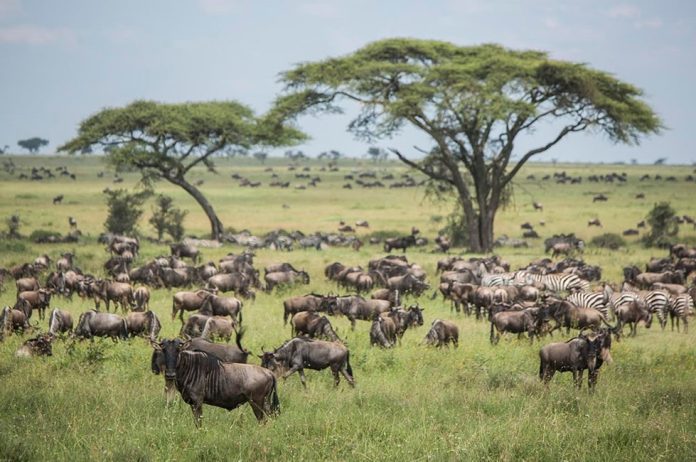
Serengeti Wildebeests Migration

Safari in Northern Tanzania – Back to The Sixth Day of the Creation

Tanzania’s natural endowment as a wildlife safari destination is unrivalled. Wild animals roam in vast areas as God intended on that sixth day of the creation. These areas are designated as national parks and game reserves and have a high reputation for being uncrowded and unspoilt. The magnificent collection of game sanctuaries to the north of the country, near the border with Kenya, is referred to as The Northern Circuit. This is the most popular and accessible wildlife safari route in Tanzania. I can positively say that this is one of the finest game viewing areas anywhere in the world. The game aside, the spectacularly diverse cluster of eco-systems and habitats is a dazzling experience for many a visitor.

The stars of the Northern Circuit are the Serengeti and Ngorongoro, very dear to the hearts of nature lovers. But no less sparkling and indeed complementing the two are the other members of the circuit: Arusha, Tarangire and Lake Manyara. In terms of wildlife, the abundance and diversity of the wildlife here is difficult to imagine. On top of the heap are the highly regarded “big five”: elephant, buffalo, rhino, leopard and lion. And then a wild array of plain animals: wildebeest, zebra, eland, hartebeest, oryx, reedbuck, giraffe, Thompson gazelle, and many more of the same genre. But do not forget the merciless predators: cheetah, wild dog, jackal, hyena and vultures. The Northern Circuit is an ornithologist’s paradise too, and over 500 species of birds are on record. On safari, you will be a witness of the shocking and fascinating dance of life and death on daily play by this combination of animals.

The starting point for northern safaris is usually Arusha town. The town sits near the base of Mount Meru and is in sight of mighty Kilimanjaro, Africa’s highest mountain. From Arusha, the nearest protected area to see wildlife is Arusha National Park, just 32 km away. In this park of 137 sq km area, you will see baboon, colobus and vervet monkeys, duikers, elephant, buffalo, giraffe, hippo, leopard, hyena, zebra and a wide range of antelopes. More than 400 species of birds have been recorded, including Eurasian migrants, who visit between October and April. One of the unique attractions of the park is that walking safaris are allowed and you can get off your vehicle for a nature walk. Due to its proximity to Arusha, the park is very popular for day trips.

Wildlife aside, Arusha National Park is a treasure with a rich tapestry of habitats including grassland, montane forest, heath and alpine desert and soda and fresh water lakes. Three spectacular features stand out: the Momela Lakes, Mount Meru, and Ngurdoto Crater. Mount Meru stands at 4,575 m and is Africa’s fourth highest mountain. It is however overshadowed by nearby Kilimanjaro, which rises above it by over 1300 m. It is regrettable that the snobbish instinct of many climbers makes them to overlook Mt Meru. The mountain can be scaled in three to four days with overnight accommodation in alpine huts.

The Ngorongoro Conservation Area, a UNESCO World Heritage Site and an International Biosphere Reserve, is located in the Great Rift Valley, a monumental fracture of the earths crust. The area is filled with volcanoes, mountains, plains, lakes and forests. Covering 8288 sq km, its main features are the Ngorongoro Crater, the Empakai crater, the Oldonyo Lengai Mountain and the archeological site of Olduvai Gorge. Olduvai Gorge is the prehistoric site where Dr. Louis Leakey discovered the remains of Homo habilis (“Handy man”) regarded by scientists as mankind’s first step on the path of human evolution. Be sure to have a look at the remains of our worthy predecessor, whose valiant industry spurred by necessity, got him making simple stone tools.

Unlike in the national parks, the colorful Maasai people, their livestock and wildlife coexist within the conservation area. The Ngorongoro Crater is the largest Caldera in the world that has its walls intact. The crater floor is a drop of 600 m and covers an area of 260 sq km with a diameter of 19 km. This magnificent natural amphitheatre is a stunning attraction in its own right and is one of the wonders of the natural world. The crater supports a year round resident population of a variety of wildlife. You will have no trouble spotting lion, elephant, rhino, buffalo and many species of plain animals- wildebeest, zebra, reedbuck, Thompson gazelle and many more. The crater floor is dotted with watering holes and holds almost 30,000 wild animals. Ngorongoro is four hours by road from Arusha or one hour by air. And from either Lake Manyara or Tarangire you will be on the road for two hours.

Lake Manyara National Park spreads between the cliff of the Great Rift Valley and Lake Manyara, a shallow soda lake. The park covers 330 sq. km, 70% of which is occupied by the lake. The varied ecosystem consists of ground water forests, acacia woodland and open grassland along the lakeshore and sustains a wealth of wildlife, including the Big Five -lion, elephant, leopard, rhino and buffalo. Other animals to be seen in the park include baboons, impala, giraffe, zebra, wildebeest, ostrich and hippo.

Lake Manyara is famous for the elusive tree-climbing lions, which can occasionally be seen along the branches of the acacia trees. It is also an ornithologists’ paradise and is host to over 400 species of birds. The water birds hovering around the lake include pelicans, spoonbills, Egyptian geese and hammerkops. In addition, migratory flamingoes arrive in hundreds of thousands creating a spectacular sight over the soda lake. You will arrive at Lake Manyara after driving from Arusha for two hours or flying for just half an hour.

Tarangire National Park is a one and half hour drive from Arusha making it very popular for day trips. Tarangire is a park of giant baobab trees, rolling savannah and acacia parkland. It is famous for its dense wildlife population, which is most spectacular in the dry season between June and September. It is during this period that thousands of animals- wildebeest, zebra, eland, hartebeest, waterbuck, giraffe, impala, gerenuk, buffalo and oryx migrate from the dry Maasai steppe to the Tarangire River in search of water. The predators -lion, leopard and others- as is the custom in the savanna follow closely by. If lucky, you will spot the peculiar tree-climbing python, kudu and roan antelope, a rare experience in the northern safari circuit. Birds are also abundant here and over 550 species have been recorded.

Serengeti National Park is Africa’s most famous wildlife sanctuary and Tanzania’s largest national park. The park is located 6 hours by road from Arusha or one hour by air. It lies in a high plateau between the Ngorongoro highlands and the Kenya/Tanzania border and almost touches Lake Victoria in the west. Appropriately named “endless plains” by the Maasai people, it features short and long grass plains, acacia savanna and woodland in parts of the north and east.

Within its 15,000 sq km area, Serengeti hosts 3 million large mammals. More than 35 species of plain animals- zebra, wildebeest, eland, giraffe, and others are found here. And so for the big five: elephant, lion, buffalo, leopard and rhino. The park is the staging-zone for one the most spectacular events in the natural world- the annual migration of wildebeest. This commences around June when over 1 million wildebeest, zebra and gazelle head for the Maasai Mara in Kenya in search of pasture. Following on their heels are the predators of the savanna- lion, cheetah, wild dog, jackal, hyena and vultures.

If you can spare the money, viewing the migration afloat a balloon is an unforgettable experience. The best time to view game is from December to May when the grass is short. Avoid late June-October, when most of the animals will have evacuated with the migration and are best seen in the adjacent Maasai Mara in Kenya. The keen ornithologist will have a good time trying to sight the 500 species of birds on record.

Camping sites can be found in the Ngorongoro Conservation Area and all the national parks of the northern circuit. Facilities are pretty basic and this is where budget travelers prefer to spend their safari nights. If you can afford it, overnight at the luxury safari lodges and tented camps. In this class of accommodation expect to find all the creature comforts associated with rated accommodation. See our Tanzania Hotels & Lodges page for info and book accommodation for your safari.

It is generally recommended to take an escorted tour package that includes transport, guide, park fees and accommodation. Tour guides have valuable useful local knowledge about the animals, where to find them and how to get where you are going. Check out our very good value escorted Tanzania Safari offers of various durations and budgets. But if you know the country well and have good knowledge of animals, then hiring a self-vehicle is an option. See our Tanzania Car Rental page to do your reservation for a self-drive or chauffer driven vehicle.

The relatively high elevation in northern Tanzania means that it never gets too hot. Indeed the nights and early mornings can be quite chilly. You are well advised to take along a heavy sweater and a windbreaker or jacket. Expect temperatures to average from 15°C in May to August and 22°C over December to March. The weather is best between June and September, but do not bet on seeing any animals in the Serengeti. For a safari covering all the parks of northern Tanzania, September to March is a good time. But remember that some of the other parks in the region offer nearly year round game viewing opportunities. April and May can be a challenging period for dong a safari for as this is when the weather is at its rainiest.

On safari, bright coloured clothing may get you in trouble with wild animals. If you are wise you will pack brown, beige and khaki clothing. Short sleeve shirts, shorts and trouser for men are adequate. For ladies, short sleeve blouses, slacks and skirts are ideal. Though the northern
region is well outside the predominantly Muslim coast areas and ladies do not have to dress too conservatively, modest attire is still a good idea. Remember to bring along a pair of sunglasses to shield you from the sometimes harsh tropical glare. Binoculars will come in very handy for spotting animals.

Uganda Safari – the Finest Wildlife Safari in Africa

0

Used to wonder how it feels to leave your home for a wildlife holiday overseas but had it all come true in the pearl of Africa when I booked a grand wildlife trip to Bwindi Forest & Queen Elizabeth Game Park. The tour started with a pick up at Entebbe international airport by our driver guide whom picked us up as early as 1:00am Uganda time a rare case with many trip organizers across the world. First the trip organizers accepted to pick us up very late at the airport a thing which surprised me till then. The next morning the same driver picked us up from Sheraton hotel Kampala to start the Uganda wildlife tour after breakfast with many interesting stops at the Equator, Masaka and Mbarara for Lunch at Igongo cultural site a reserved ground for cultural tourism in western Uganda and the right place to taste local delicious foods in Uganda.

After Mbarara the road stretched further and deeper in the afternoon as we get closer to Bwindi forest the prime wildlife viewing paradise destination in Uganda. The drive lasted for nine hours keeping us on the road from morning to late evening when we got at our lodge-Mahogany springs one of the exceptional luxury lodges in Bwindi Forest. The lodge staff welcomed us warmly from the tiresome road travel- Kampala – Kabale Buhoma a thing which made me worried for awhile spending 9 hours on a road which become dustier as we left the high way and got more closer to the park. Hope came when I started seeing the jungle forest and its cool winds blowing all the way as a welcome sign of guests to the rain forest. The beauty of the forest only made me realize that the drive was worthy its treasures. Before reaching our lodge we passed by some lodge and camps built in a lovely way and all overlooking the rain forest. We spent the evening relaxing as we wait for the long waited moment to see the mountain Gorillas of the forest.

Bwindi Forest forms a thick canopy and during the briefing was wondering how we were going to walk through the tangled jungle to meet the mountain Gorillas but the park ranger guides said they will walk with us and show us the way until when we meet the apes. The rangers where informed that they kept on answering each and every question through out the trek and we saw the Gorilla in just two and half hours a fare time compared to those who trek for a full day and even have lunch in the jungle. We spent one hour of photography and return to our lodge for lunch. Happiness and memories of the mountain Gorillas made me smile the entire day but missed telling my home people how my day was too amazing because of the jungle internet problem but the sad moment was also washed away by the local cultural group dancers at Bwindi Forest who kept us occupied the entire afternoon. Happiness resumed after visiting a local group of local women and children who sang and danced for us a folk song. I never understood the words but I tried understanding the meaning of the song by the action of the singers and dancers. The children danced so well even compared to the elderly and really made my gorilla tracking experience in Bwindi the very best.

Queen Elizabeth was next on our itinerary and we left the next morning passing in the wilderness of ishasha the parks wildlife source. We spend more than one hour in the wilderness looking out for tree climbing lions my second reason to visit the pearl of Africa. We did see them up close which made my day brighter leaving a good mood for Mweya Safari Lodge for lunch a a beautiful lodge full of great views in Queen Elizabeth. I loved Mweya safari lodge just name but it was really nice with excellent staff, food and services. A cup of morning coffee woke us up the next morning to head out to the park for a morning game drive an activity which exposed us to four of big five -lions, Buffaloes, leopard, and elephant which we saw at last on our way back to the lodge for breakfast. Other wildlife included–Kobs, hippos, and many more.

More amazing moments never seize to come but the boat cruise on the lovely Kazinga channel again filled our afternoon ending the day in excitement. Hipos, birds, crocodiles welcomed us and kept checking on us as we sailed on water. The endless plains of park gave us the most stunning views in every angle we curved. Chimpanzee tracking was our last activity in Queen Elizabeth followed by a drive back to Kampala arriving late evening with a drop off at our hotel of residence. It’s truly a magical wildlife experience that after travelling to Uganda even other family members visited the country.

What Does it Take to Save Just One Rhino?

0

With one rhino dying by the hands of poachers every seven hours, there isn’t time to waste, and with everyone’s help, the #JustOneRhino campaign might just make a difference.

2015 is set to be an incredible year for the endangered rhino. The largest blogger-driven fundraiser ever assembled has started making waves in the fight against poaching. Two organizations, Travelers Building Change (founded by Jeremy Scott Foster) and Justic Travel have teamed up to raise money for Rhinos Without Borders through 2015. Rhinos Without Borders was developed to save rhinos by translocating them from South Africa to secret locations in Botswana with the hope of providing a safe haven for them to thrive in. RWB’s conservation goal for this year is to raise five million dollars and translocate 100 rhinos out of harms way. This project was started by National Geographic Explorers In Residence Derek and Beverly Joubert, founders of the Great Plains Foundation.

With 100 percent of donations going directly to the project, over 120 of the world’s top travel bloggers have joined the Jouberts’ cause to save #JustOneRhino. Over 20 sponsors have also signed up to give away more than $30,000 worth of travel prizes, such as resort stays, tours and exciting adventures in dozens of countries. According to a recent press release posted by supporters of the #JustOneRhino campaign, “Every donor to the TravelersBuildingChange.org site earns chances at winning incredible prizes, including a safari in South Africa, a Galapagos Islands cruise and stays at luxury resorts in Latin America, the Caribbean and Asia. The Jouberts are also offering #JustOneRhino donors additional incentives, such as origami rhinos and downloads of their wildlife photos.” The campaign ends March 1 and even though the #JustOneRhino hashtag has already reached nearly 4 million people on Twitter, there is still much more that needs to be donated.

Even with so much left to do, Jeremy Scott Foster was able to spare a few minutes to answer our questions about the campaign and what it would take to save the African rhino.

Why spearhead a campaign like #JustOneRhino?

The idea behind Travelers Building Change is to support the communities which have nurtured people on their travels. Last year we raised money for elephants in Thailand and this year we’re supporting rhinos in Africa. Both places have been highly affected by tourism and, with so much to lose (we’re talking about an entire species, here), we knew that rhinos had to be the focus of our campaign this year.

Was there a personal reason that prompted your interest and involvement?

I actually began working on this project for some more personal reasons. I was feeling entirely overwhelmed by the amount of kindnesses that I was experiencing, time and time again, on my travels around the world. When nobody ever asked for anything in return, I knew I had to take it into my own hands in order to pay these kindnesses forward. So I started a charity project and, over the past three years, it has evolved into what you see today.

Why does it cost so much to translocate a single rhino? What does the process involve?

The translocation process is actually quite involved. After a lengthy process of identifying and selecting a rhino for relocation, a crew arrives by helicopter and darts and sedates the rhino. Blood samples and other information about the rhino are collected and the strength of each rhino is assessed to ensure it is strong enough to make the trip. Finally, it is loaded into a container and driven to a quarantine enclosure. After a six-week quarantine period, the rhinos are airlifted and distributed to a secret, remote location in Botswana. Once the rhinos are on the ground, teams assess their health and set them free. In total, the whole process costs $45,000.

What makes Botswana so much safer than South Africa? What is stopping poachers from moving there and doing the same thing?

Much of the relocation has to do with “spreading the risk.” Moving rhinos to another location makes it much harder for poaching units to come in and hit large numbers of animals at one time. Not only does South Africa hold 80% of Africa’s rhino population, but they have some of the most liberal poaching laws on the whole continent. The translocation helps to spread the assets and into areas where poaching is a much more difficult undertaking.

There are extremely stringent anti-poaching laws in Botswana, which do not exist in South Africa. The anti-poaching units, who operate on the ground in Botswana, function under a shoot-to-kill policy in which any uncooperative poacher is treated as an aggressive military threat. This should be a major deterrent to any poachers hoping to hunt in Botswana.

What kind of progress has #JustOneRhino seen so far? What will it take to become a reality?

The #JustOneRhino is a smaller project in a much larger fundraising effort. We still have a ways to go before we meet our goal of raising $45,000 to translocate #JustOneRhino, but every dollar counts. Rhinos Without Borders, the organization that we are raising money for, is hoping to raise $8 million toward the relocation of 100 rhinos in the year 2015. By the end of 2016, they’re hoping to have moved 500.

Apart from donating to causes like this one, what else can travelers do to fight against poaching?

The truth is that donations are the only thing that will help right now. The rhino situation is critical and, although raising awareness is extremely valuable in its own right, there simply isn’t enough time for that to be our only recourse. One rhino is being killed every seven hours. 50 years ago there were 500,000 black rhinos in Africa, and now there are only 5,000. If there isn’t drastic intervention, the end of the rhino is a very real possibility and it takes place within our lifetime.

If you are interested in being a part of the #JustOneRhino campaign, visit TravelersBuildingChange.org. No donation is too small.

Orangutans Dying as Demand for Palm Oil Soars

0

During the 1950s, the Sarawak house of Barbara Harrisson and her late husband Tom became a home for orphaned baby orangu-tan who had been found helpless in the jungle. Here, she describes her experiences rearing orangutan in a half-wild state and her attempt to re-educate them to jungle life.

The Harrissons decided eventually that their partially domesticated animals would have great difficulty surviving in the wild– yet keeping full-sized orang-utans in the home was no more practical. This personal account of the joys and trials of raising orang-utan is both informative and delightful reading.

Summer 2013 Explorations

0

Looking for ways to fill your time this summer? I have some ideas:

  • Visit the Fort Worth Zoo’s newest attraction: Texas Nature Traders. Traders bring in nature items (such as rocks and fossils) in exchange for points. Redeem your points (or save them for future use) for items in the Nature Trader inventory. Click here to learn more.
  • Go camping.
  • Keep a nature journal.
  • Complete a scavenger hunt at the Fort Worth Zoo.
  • Listen at night for different animal calls, such as owls, frogs, and insects.
  • Visit a state park and go for a hike.
  • Complete some of my Earth Day activities and celebrate conservation year-round!
  • Check out my teacher resources or STAAR activities for more fun ideas.

Be sure to keep yourself and wildlife safe! Here are some tips:

  • Wear sunscreen and bug spray. While you’re at it, wear a hat, too!
  • Use binoculars to view wild animals. Don’t get too close, and definitely don’t touch!
  • Eliminate standing water so mosquitos don’t have a place to lay eggs.
  • Drink plenty of water.
  • Keep an eye on your pets, and be sure to bring them and their food inside at night when nocturnal animals are most active.
  • Be smart and safe in the water this summer. If you go fishing, check out this fishing safety video.

You won’t hear from me too much this summer since I’ll be busy exploring, but I’ll check in about once a month. Get ready, because this fall I’ll be back for a whole new school year of adventures! Until next time … happy exploring!

Endangered Species Day 2013

0

Happy Endangered Species Day! I’m celebrating on my blog by going through some of my past posts and reminding myself (and you!) about the success stories of animals that have benefitted from conservation, and the challenge stories about animals that still need help. Scroll through the pictures below and click on any animal that you find especially interesting to learn more.

Mammals

Tigers

African lion

Black bear

Greater one-horned rhinoceros

Lemurs

Cheetah

Black rhino

Jaguar

Sumatran orangutan

Elephant

Reptiles and Amphibians

Anegada iguana

Gharial

Radiated tortoise

Puerto Rican crested toad

Texas horned lizard

Louisiana pine snake

Houston toad

Birds

Storm’s stork

Madagascar crested ibis

Harpy eagle

African penguin

Aplomado falcon

Whooping crane

Success Stories

Mountain lion

Brown pelican

Red wolf

Bald eagle

American alligator

Redfish

Can the elephants survive the coup in Central African Republic

0

Last month saw the government of the Central African Republic overthrown by rebels and the state has now become lawless. Rebels groups have reportedly joined up with Sudanese poachers and elephants are facing a crisis. Conservation groups World Wildlife Fund (WWF) and World Conservation Society (WCS) have today released a joint statement calling for immediate action to tackle the problem.

Elephant meat is openly on sale in the markets and villages around the World Heritage Site of Dzanga-Sangha protected area.  Many of the park rangers have fled the area because of the dangers as rebel groups take control.  The WWF have pulled many of their staff out of the park after a series of armed raids on their offices. Some rangers and WWF staff have stayed behind to try and protect key areas despite the dangers to their lives.

Bas Huijbregts, head of policy for WWF’s campaign against poaching in Central Africa, said it’s impossible to know for sure how many elephants have been killed because patrols have been suspended in the area.

Given the total absence of any type of law enforcement and rule of law in the  area, there is elephant meat all over the place,” he said. Heroic rangers are standing firm in the face of immense danger, but they alone cannot safeguard the special species and places the world treasures.

Despite patrols being severely restricted since the coup on 24th March it’s known that at least 40 elephants have been killed in or around the World Heritage Site. The rebel group behind the overthrow of the country are the Seleka and they are known to have joined forces with the Sudanese poachers who regularly target central African elephants.

Next week sees a regional meeting of African countries to discuss ways of tackling elephant poaching the is rife across the region.

Jim Leape, WWF Director General said, “The elephant poaching crisis – driven by insatiable ivory demand – is so severe that no area is safe, not even the World Heritage Site Dzanga-Sangha where both WWF and WCS have now worked for the conservation of elephants for decades. Heroic rangers are standing firm in the face of immense danger, but they alone cannot safeguard the special species and places the world treasures. When meeting next week, Central African governments must urgently join forces against this criminal activity that is also threatening the stability and economic development of their countries. I encourage them in the strongest terms to take a stand against wildlife crime and together declare that poaching and illicit trafficking will not be tolerated.”

Cristian Samper, WCS President and CEO said,  “Together, WCS and WWF, are calling on the Central African Republic government to immediately increase security in the region to protect these elephants from poachers and is asking other regional governments to provide assistance to stop the killing. Our staffs have been forced to evacuate in the chaos. I recently visited CAR and saw first-hand that without a full-time conservation presence in the region, these elephants are in jeopardy from poachers. WCS and our partners will continue to work tirelessly to protect elephants across their range.”